Sunday, June 3, 2012

Marble Madness

Hi everybody on the internet that is reading this,

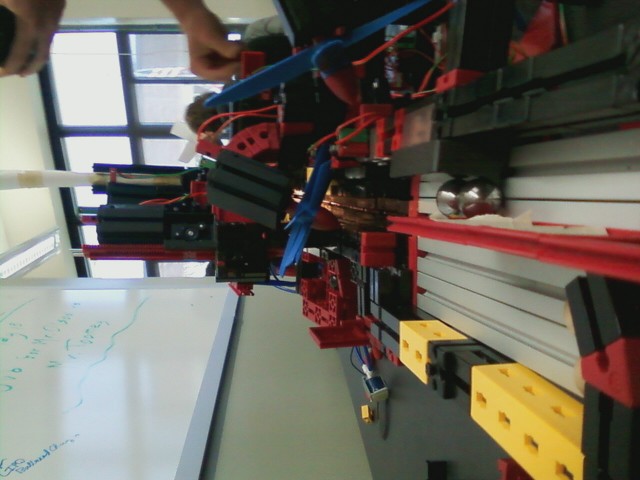
I just completed my latest and greatest project with my group so far, I helped to complete a machine that will sort different types of marbles due to light sensitivity. While my team constructed the bulk of the machine, I managed to help create key components that made the machine possible to function. I managed to help out my teammates at least three times with making the system possible.

The first was with the pioneering of the modern pneumatics. Pneumatics is the use of air pressure in order to move pistons and activate machinery. While my team was building the structure of the machine, I explored the realm of pneumatics because I realized that if I can get a functioning system with it then I can use air pressure to help my team achieve the goal of success. Using experimentation with channeling air pressure through tubes and pistons and advice from my teacher, I eventually created a working system with pneumatics that would eventually be used throughout the class. I basically created a motor powered rotor that would turn a crank and then create air pressure in a fast moving piston. The air pressure would then travel through a tube towards a containment tank, and then it would travel through a couple more tubes and would get funneled into two air blockers. Using electricity, these air blockers would create a detour for the pressure, and would force it through an alternate intersecting tube that would channel the air pressure to a couple of pistons. Using a computer program allowed the piston to move upward and downward due to air pressure and a timer.

The second was creating containers for the marbles to fall into once the light sorted the marble out. I brainstormed several creations that can be attached to the main machine for the different types of marbles. I managed to build containers for three of the five marbles (the last two were made by my teammates). I would work on one container at a time in order to ensure my thoughts stayed organized while I was building. First I would build a support structure/pathway that would extend from the main machine to the container. Then I would build the actual container, which is basically a box shaped container with walls preventing marbles from leaving the container once they entered. Finally I would try to anchor the container to the pathway and another part of the machine to ensure stability. After a few tests to ensure that the container works, I would rinse and repeat for the remaining two containers.

The third was the creation of the funnel that would channel the falling marbles into a straight line towards the machine in order to get sorted. I had to do a little bit of hard thinking and brainstorming with this one. Once I figured out that I could use any type of material for the funnel, I would grab some paper, wrap them into a funnel and vertical tube shape, and use tape to hold the paper together. I then tried to attach it to a fishertechnik funnel in order to connect the whole funnel to the machine and to sort the marbles effectively. The problem was that it took me a while until I managed to find the best design for the funnel. It ended up with a 3x3 fishertechnik vertical tower with space in the middle of the pillars, and a long, narrow funnel with a large opening at the top and being contained by the surrounding pillars. I also finally put a small ramp at the bottom of the funnel in order to ensure that the marbles wouldn't clog up the funnel when going downward and out.

Although it would look like I did the least to make the project work as a whole, the lack of my assistance with my three creations/designs would not make the effective machine that it is now. This was probably my latest and greatest project that I have yet to work on.

Here are a few pictures of the whole completed project:


These pictures were made possible by my teammate, Putnam

Tuesday, March 6, 2012

Moneyball

Hi everybody,
We finished watching a baseball movie called Moneyball, it talks about using art and science to use money in the least amount as possible to pick players that would benefit the baseball team, Oakland Athletics, the most.
Here are some questions about this movie.


1) What was the “Moneyball”approach that Billy Beane and Peter Brandt applied to the Oakland Athletics 2002 season? Was it an “art” or a “science”? What single statistic did they boil their value consideration down to? (In class research/discussion)


The "Moneyball" approach that Billy Beane and Peter Brandt applied to the Oakland Athletics 2002 season was to buy the baseball players with the best statistics with as little money as possible. I would have to say it was both an "art" due to the effectiveness that the approach brought (won 20 times in a row), and a "science" because the approach only focused on the players that had the best stats/personality over the most paid/popular. The single statistic that the two boiled their value consideration down to was on-base percentage.

2) What is the equation used to calculate OBP? (In class research/discussion)

The equation that is used to calculate OPB is:
OBP = \frac{H+BB+HBP}{AB+BB+HBP+SF}
Where:
  • H = Hits
  • BB = Bases on Balls (Walks)
  • HBP = Times Hit By a Pitch
  • AB = At bats
  • SF = Sacrifice Flies
3) What is design? (In class research/discussion)

Design is the plan/preparation for the construction of an object like a building or a machine.

4) Describe 3 situations where movie characters (intentionally or not) applied a step from the PLTW 12 Step Design Process. Explain both the (a) situation as well as (b) how the step is relevant:

1 - The first situation was when Billy Beane used the Define the Problem step when his bosses kept straying away from the problem at hand, and Billy wanted to get his bosses to trace a few steps back to have them understand what the real problem at hand. The situation effectively shows the Define the Problem step because this step has the engineer focus on the problem at hand before doing anything.


2 - The second situation was when Billy Beane used the Refine step when he had to fire one of his own baseball players that he used the "Moneyball" approach on due to the player being a jerkface. The Refine step has the engineer make some changes if needed when they work with their selected apporach, Billy firing a poor personality baseball player shows the example of the Refine step.

 3 - The third situation was when Billy Beane was meeting with his boss to preform the Communicate Results step. Billy would talk with his boss to discuss how well/poorly the team was going, and the basic numbers and stats they have right at the moment. The Communicate Results step has the engineer go over what happened in the end, and how well/poorly the apporach and conclusion went, and Billy showed this step when he had to meet with his boss about the team stats and conclusions.

5) What is “Leadership”? List the three aspects of leadership that we come up with in class. (In class research/discussion)

1 - Providing direction or a vision for your followers
2 - Alignment in order to get the people to understand and follow the vision
3 - Comitment to have the people actually follow you into completing the vision

6) Describe 3 circumstances from the story where a character exercised effective leadership:
1 - 1st circumstance was when Billy stood up to the members of the board meeting to try to get the group to focus back at the problem at hand when the other members seemed lost on what to do.


2 - 2nd circumstance was when Peter Brandt had to find the best players in terms of stats, and had to bargan effectively in order to get the man the A's needed.


3 - 3rd circumstance was when Billy Beane fired one of his own Moneyball players after showing to the team that he was a jerk and a poor team player.

7) According to the movie, what was the A’s record at the start of their winning streak? ___ : ___

A's record at the start of their winning streak was 68:51.

8) What does this ratio simplify to (roughly)? ___ : 1

The ratio simplified to roughly 1.3:1 wins to losses.

9) How long was the A’s record setting winning streak? ___ games won.

A's record setting winning streak lasted for 20 games won.

10) Given the A’s win/loss ratio at the start of the streak (listed two questions above), what are the odds of winning 20 games in a row? Run the numbers. (In class research/discussion)

The odds of winning 20 games in a row are .0013% chance after you preform .57^20.

11) Based on your calculation, do you think the A’s got lucky or was there something to the Moneyball approach?

I believe that luck was a major factor in the success of the A's, but I also believe that the A's got the upper hand due to the "Moneyball" approach and the fact that the A's are composed of people of the best stats and OBP. This is what caused them to get such a record.

12) Did Billy Beane strictly apply the “science” of Moneyball to his management approach? Was there an “art” to his efforts as well? Describe a circumstance where he broke from the Moneyball approach to make a positive change for the team.

I belive that Billy Beane did strickly apply the "science" of Moneyball to his management approach by searching and buying players with the best stats and OBP. There was indeed an "art" in his efforts as well. He broke from his Moneyball approach when he fired a young baseball player for being rude and a jerkface despite that Billy got him from the Moneyball approach.

Bonus Question (look into this if you’ve finished ahead of the class):
Money Ball was originally a book. What author wrote the book? What other books has this author written? Is there a theme to his writing?

The author of the book was Michael Lewis. He also had written "The Blind Side: Evolution of a Game," "Liar's Poker," and "The Big Short: Inside the Doomsday Machine." I believe that the theme to his writing is the importance money has played in history and how it had played in the individual lives of the people and buisness.

It's "Oscar Season", will Moneyball win the Oscar for any of the categories it's up for?

No it won't win any Oscars for any of the catigories it's up for.

Monday, March 5, 2012

Open and Closed Loop Systems

Hello everyone,
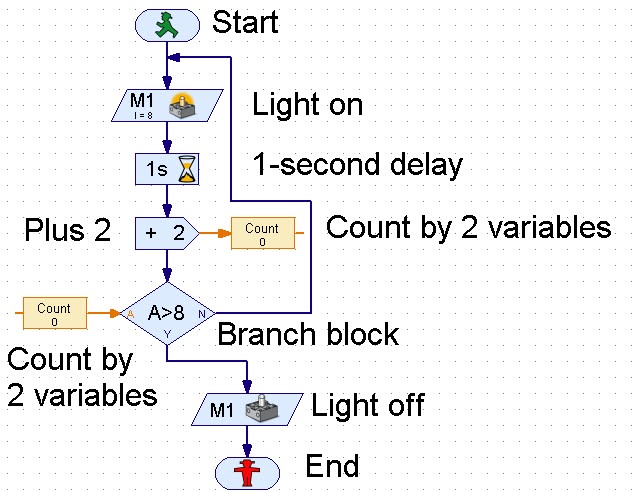
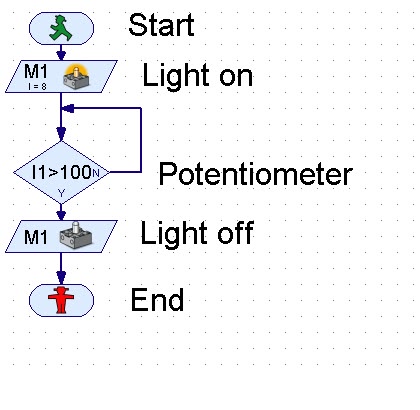
I have gone further with the progaming from basic to advanced. Now I have program that can go back and forth by the use of electricity and with light. Here are some examples:


Aren't they impressive! Here are my conclusion questions:
1. Describe an open loop system that has not already been given as an example. Could the system benefit from feedback? Justify your answer.

An example of an open loop system that has not yet been given as an example is a microwave oven because the appliance has a program that starts and stops at the time given to it. This system could benefit from feedback becasue if the system has something like a heat sensor, then the microwave oven will be able to sence when the object has heated up to a certain degree of temperature.
2. Describe a closed loop system that has not already been given as an example. Describe the feedback utilized, and describe why that type of feedback is utilized.

A closed loop system that has not yet been given as an example is the lightblub sensor. The feedback utilized for the lightbulb sensor is that it turns on when motion is detected, and when there is no motion for a while then it turns off. The reason why the type of feedback is utilized is to save money for keeping the lights on, helps to conserve power, and for the convenience of the people that are in the room at the moment.

Tuesday, February 21, 2012

Variable Loops

Hi everybody of the internet,
I have made a third item of progression with variable functions. This will allow me to repeat a step by step process by a limited amount of loops for future projects.

Here are my variable functions:


Aren't they amazing! This is much more advanced than my previous basic programings a couple of blogs ago.

Here are some conclusion questions and answers:

1. Describe how you might modify the Plus command so that it can reset a variable block to 0 within a program.

You might modify the Plus command so that the variable block would reset to zero by changing the Plus command to a Minus command, and change the variable so that the variable would deplete to 0 once the variable reaches the minus step.

2. What might an industrial or manufacturing engineering need to count or keep track of? Describe one example.

Something that the industrial or manufacturing engineering needs to keep track of is the amount of products produced in the end and during the process. Variable loops are necessary to keep track of product amount without having the need to count each seperate product.

Tuesday, February 14, 2012

Branch Functions

Hi everybody!
I have expanded on my basic programing to include branching in the functions with analog and digital branches. Here are my pictures of my new programs with branches.


I hoped that you have enjoyed them!
Here are my conclusion questions and answers:

1. Describe why it is important to include branches in programs.

It is important to include branches in programs because it can let computers know when to turn somethiung on or off, tell what is right and wrong, or just tell the computer to do either one thing under a certain condition and the other thing under a certain condition opposite to the first.

2. Describe an everyday application of a normally open switch that has not been given as an example.

An everyday application of a normally open switch that has yet been given as an example is a television or lamp.

3. Describe an everyday application of a normally closed switch that has not been given as an example.

An everyday application of a normally closed switch that has yet been given as an example is a water heater or a cable box.

Thursday, February 9, 2012

Basic Programing

Hi everybody,
I have just started with basic programing, its rather fun creating the one way programing circuit.
Anyway, here is my basic curcuit with basic programing.
Isn't it something!
Here are my conclusion questions:

1. What is the best way to make sure that all of your devices are in the same correct ports of the interface and have been wired correctly.?

I believe that the best way to make sure that all of my devices are in the same correct ports of the interface and have been wired correctly is to test the program and to note any abnormalities that may come out of it.

2. Explain the importance of labeling block functions within a flowchart.

The importance of labeling block functions within a flowchart is to keep track of what is happening within the program in order to avoid confusion and possible misunderstandings.

Tuesday, February 7, 2012

Flowcharting

Hello everybody,
It's been a while since the last blog post, but here is the latest but not greatest one yet. I have completed a few flowcharts. Flowcharts are a type of planning process that engineers use to think though and solve a problem they have on their hands.
Here are my few flowcharts.


Here are some questions and answers about flowcharting:

1. How is flowcharting similar to using a map to plan a route for a trip?

Flowcharting is similar to using a map to plan a route for a trip because you must plan on what path to take on the map in order to get to the destination, and you also have to plan for a way to return to the start from the end like a flowchart.

2. Describe a process that you perform every day. Develop a flowchart that illustrates the process

A proccess that I preform everyday is choosing what to wear when getting ready for school

Here is the flowchart

Sunday, January 8, 2012

The Smartest Machine on Earth

Hi there everyone,
I watched a video earlier about a robot that people claim to be the smartest robot made so far with a good amount of artificial intelligence. The robot was then placed on Jeopardy to test the AI of the robot to the limit against Jeopardy's biggest winners to see who would win.


What is "machine learning"?

Machine learning is I think the ability for a machine to gather all known data about a question that it is confronted with, and if it makes a mistake then it will log it into memory for future questions that are similar to the previous (mistake) question.


How did the IBM team employ that concept in the development of Watson's AI? What advantage did that provide over previous attempts at "intelligence"?


The IBM team employed that concept in the development of Watson's AI by making it go through practice runs of Jeopardy, and giving it access to a vast list of data within the memory banks. The advantage that Watson's intelligence had over previous attempts at "intelligence" was that original intelligence like chess had set rules and possible reactions while Watson's intelligence involved previous knowledge combined with knowledge learned by mistakes and new experiences. 

I've often mentioned the term "Empirical Scepticism". What does that mean? How does that relate to the concept of Machine Learning? How does this relate to your life?


Empirical Scepticism means questioning the basis of scientific understanding or testing science that we know to see if it fits the Scientific Method or not. Empirical Scepticism relates to the concept of Machine Learning by having us question to see if Machine Learning is possible despite claims from society about the possibility of failure. Empirical Scepticism relates to my life because I like to question things that I see and experience in life to see if it is truly fits in science and truth or to see if it's a pseudoscience or just made up.

The Car of the Future

Hello everybody,
I just watched a video that talked about the car of the future! Isn't that something?! If would want a car of the future, I would get one that is durable, gets good gas mileage, has a huge gas tank, and has a strong engine.


So what is the car of the future? In other words, what appears to be the most promising technology explored by Click and Clack? Justify your response.

The car of the future is one that appears to be the most promising technology explored by Click and Clack is a car that is powered by hydrogen because not only will it power the car, but burning hydrogen will not harm the environment since the exhaust from the car would be water vapor instead of carbon dioxide from petroleum.


What fields of study/work would support the development of the car of the future. Describe two different ones.


The fields of study/work that would support the development of the car of the future are the study of hydrogen as a source of fuel and engineering by creating more efficient car engines. By studying hydrogen in relation to car fuel or as I like to call it "hydrology with cars" you would be able to create a fuel from the explosive element that is environmentally friendly and economically valuable. By doing engineering in relation to car engines you could learn about how an engine works, and will be able to find ways to get more use out of it.

Tuesday, January 3, 2012

Engineering Ground Zero

Hello people of the Internet,
In New York City, there is a new world trade center that is being built upon at Ground Zero. The tower being built is going to be more stable and supportive than it was before when it was first built.

What different "trades" (types of construction work) are featured in this video? Name at least three.
The types of "trade" that are featured in this video are:
  • Architecture trade
  • Electrical trade
  • Concrete trade
  • Plumbing trade
  • Steel trade

What aspect of the project is most interesting to you? Why is that?

The aspect of the project that is the most interesting to me is that the construction workers are building inward then outward with a stable base and middle on the inside. The reason is that the workers are making the building as safe as humanly possible in order to prevent another act of possible terrorism from succeeding again, and that they are now using the strongest tools to build it like concrete and steel.

Thursday, November 3, 2011

Professional Interview

This blog will consist of my interview with my dad whom had experience with engineering technology.


I received permission from Mr. Olson (my teacher) for interviewing my father, and I also received permission from my father for allowing me to interview him.


Here is some basic information about him:


Name: Michael J. Cox
Specific Degree: Bachelor of Science
Place of Employment: United States Navy
Contact Information: coxrocks50@hotmail.com


Here are the questions that I had asked him, and the responses that I got from my father about them.


Please describe your engineering field.

Gas-turbine engineering, he was the Chief Engineer for a guided missile frigate in the United States Navy. He was responsible for two LM2500 gas-turbine engines for primary propulsion and two diesel engines for auxiliary power. He also was also a gas turbine inspector for the Commander, Pacific Fleet's Propulsion Examining Board. He would fly all over the Pacific to Japan, Hawaii, and the West Coast Naval Bases to inspect the Engineering plants of all surface combatants. These included, carriers, cruisers, destroyers, and frigates.

What is your current job title?

He is a Commander in the United States Navy, and his designator is a Surface Warfare Officer.


Please describe your particular job and duties.

As the Chief Engineer, he was responsible for 75 engineers for the operation and maintenance of the ship. He and his engineers provided heat, electricity, propulsion, and fresh water for a crew of 350 people on the ship.

What is your average work schedule?

When his ship was in port, he would arrive at the ship at 6:00 A.M. and depart around 7:00 P.M. five to six days a week.  When the ship was underway, he worked for 18 to 20 hours a day seven days a week. The ship was underway about 2/3rds  of the time conducting operations and training for deployment.

Starting with high school, describe your educational background chronologically.

He took college focused AP and Honors classes like trigonometry, chemistry, and physics in high school. In college he took calculus, differential equations, electrical engineering, and chemistry. He received a masters degree in international business. After college he took various engineering courses with the navy.

If you had it to do over, related to your career or education, would you do anything differently?

He felt like that he was satisfied with his education and careers he took and wouldn't change a thing because each event that he took led to the next event and that greatly benefited him.

What advice would you give to me as someone interested in pursuing a career path similar to yours?


The advice he gave was to go to Naval Academy, or if I can't do that I should go to the Naval ROTC at another university.


Here are my reflections on my interview with my dad.


What surprised me the most in my interview with my dad was that he put in a ton of time when working at his ship when it is in port and underway.


The most important piece of information that I learned from this interview was that if I wanted to gain the same education on engineering then I know which classes to take like calculus and trigonometry, and where I should go to finish my education like the Naval Academy.


This interview has influenced my feelings about my future career by giving me an idea of what I might do with the engineering skills that I learned in courses and classes, and it gave me a great example of one part of the jobs that you can do that require skills in engineering.

Steve Jobs' Reflections

Tuesday, November 1, 2011

The Deep Dive

Wow, what a design.
I am impressed that a group of people were able to recreate an item like the shopping cart into a futuristic item. I would want to go shopping with one of those carts myself. It is amazing that we can remake anything we want, except for nature.
Here are my blog questions/answers

1. “From the buildings in which we live and work, to the cars we drive, or the knives and forks with which we eat, everything we use was designed to create some sort of marriage between ____form_____ and _____function_____.”


2. The folks at IDEO state that they are not experts in any given area. But, they do claim to be experts on the _____design process_____, which they apply to the innovation of consumer products.


3. After the team of designers is brought together, told the problem, and informed they have five days to “pull it off,” what phase of the design process do they immediately engage in?


The phase of the design process that they immediately engage in is the Brainstorming Phase when they were brought together, told the problem, and are told that they had a five day deadline.


4. Give two examples of what the team members did during this phase.

a. They went to the supermarket and observed the shopping carts in action.


b. The group generated a list of ideas that they posted on the wall, and voted for the best design to build.


5. List five rules-of-thumb that IDEO employees follow when they share ideas during the brainstorming phase:

a. One conversation at a time.


b. Stay focused on the topic.


c. Encourage wild ideas.


d. Defer judgement.


e. Build on the ideas of others.


6. Why should wild (and sometimes crazy) ideas be entertained during the brainstorming phase?


Wild and crazy ideas should be entertained during the brainstorming phase because it allows the design group to branch out and build on the idea, while plain and simple ideas are hard to branch and build upon.


7. After the brainstorming phase was over, the team narrowed down the hundreds of ideas by ___voting___ for those ideas that were not only “cool” but also _______buildable__________ in a short period of time. What phase of the design process is this called?


This part of the design phase is the Select an Approach Phase because the group was selecting one design out of hundreds of ideas.


8. IDEO believes that the ideas and efforts of a ___group___ will always be more successful than the planning of a lone genius.


9. Once the ideas were narrowed down and divided into categories, the group was split into four smaller teams. What phase(s) of the design process was each of these groups responsible for?


The phases of the design process that each group was responsible for using were Identify Criteria and Specify Constraints, Explore Possibilities, and Make a Model or Prototype.


10. The leaders at IDEO believe that __chaotic__ behavior and a __creative__ environment are two important reasons why their employees are able to think quickly and creatively to produce innovative results.


11. Sometimes, people come up with great solutions that work by trying their ideas first, and asking for ________permission_________ later.


12. Design is often a process of going too far and having to take a few steps back. What phase of the design process would the critique of the four mock-ups come under?


The phase of the design process that would critique the four mock-ups is to Test and Evaluate the Design using Specifications.


13. Upon critique of the four teams’ models, it was obvious that none of the teams had developed an optimum solution. However, the people at IDEO believe that it is important to ___fail___ often in order to ___succeed___ sooner.


14. What percentage of the entire week’s time did it take to fabricate the final prototype?


It took about 40% of the time needed during the week to complete the final prototype.


15. Instead of showering his design team with a tremendous amount of praise, what did the boss require his employees to do with their new design?


The boss required that the employees take the finished design to the supermarket to test the design out.


16. Of all the things that we are surrounded by every day, what has not been placed through the design process?


The only thing that has not been placed through the design process out of all the things that we are surrounded by everyday is nature.


Conclusion

1. What did you find to be the most impressive part of the team’s effort?


What I found to be the most impressive part of the team's effort was that they would work day and night to complete their product, and I also find it impressive that they are able to work better under chaotic behavior and a creative enviroement.


2. What advantages are there to having a design team with members that have non-engineering backgrounds?


The advantages of having a design team with members that have non-enginerring backgrounds is that it allows for more wild ideas to be created and built upon, and they could use their own background to contribute a new approach to the general project.


3. There was a point in the process where a self-appointed group of adults stepped up, stopped the ideas, and redirected the group to break up into teams. Why was this done?

The group of self-appointed adults stepped up, stopped the ideas, and redirected the goup to break into teams becasue they feared that under a time constraint that they wouldn't get the job done in time with the group voting on designs, and that by spliting into teams the group has a better chance of getting the job done under the five-day time constraint.


4. At the end of the video, Dave Kelly states, “Look around. The only things that are not designed are the things we find in nature.” Can you think of anything that would contradict this statement?


I think that there are more items that can't undergo the design process in outer space. For example, we can't recreate the sun in a different way, we can't recreate gravity in another way, and we can't recreate black holes or supernovas whenever we want to.

Monday, October 31, 2011

Halloween Blog

Hey everyone,
Happy Halloween! I would like to show the pumpkin that I made today in class using a special art program.

Pretty cool huh.

Thursday, October 27, 2011

Energy Sources

Hello everyone
We just completed and presented our energy sources project. There are nine energy sources in total, and all nine energy sources were split among the class. I got the energy source, coal, and I created a PowerPoint presentation that talks about coal and its usefulness in energy production.
Here is my PowerPoint presentation:


Energy Source Questions:
1. Describe one thing that surprised you about the energy source that you researched and presented.

One thing that surprised me about coal while I researched and presented it is how it is one of the most (if not the most) used energy sources in the world, and that about 30% is actually used efficiently.

2. Describe one thing that surprised you about an energy source that another team presented.

An energy source that was presented today that surprised me was hydro power because it is one of the oldest energy sources in the world, and that it is generally about 50% effective at creating energy.

3. Describe and defend what you believe to be the most important technological need regarding energy.

I think that the most important technological need regarding energy is solar power. It is a renewable energy because the sun will never go away, and that it is endlessly giving off solar energy that is drastically more beneficial to the planet than the use of oil or nuclear energy.

Tuesday, October 4, 2011

Emergency Preparedness Supply List

A couple of Thursdays ago, the entire Southwestern U.S. underwent a huge blackout, and many residents weren't prepared for such an event. A crisis like this tells us that we must be prepared for events like this in the future.

Define the Problem:
Three emergencies that my family and I would need supplies for are:
  • Fire
  • Tsunami
  • Earthquakes
Brainstorm Ideas:
20 supplies that I could use for those emergencies are:
  1. food
  2. water
  3. clothing
  4. money
  5. candles
  6. flashlights
  7. dust mask
  8. watch
  9. radio
  10. television
  11. spare batteries (Stanley)
  12. important documents
  13. whistle
  14. medicine
  15. inflatable raft
  16. knife
  17. cellphone
  18. cellphone charger
  19. passports
  20. first-aid kit
Generate a Solution:
A list of items that I can use in emergencies that are affordable for my family and I are:
  1. food
  2. water
  3. clothing
  4. money
  5. spare batteries
  6. flashlights
  7. radio
  8. watch
  9. first-aid kit
  10. candles
  11. important documents
  12. passports
Solicit Feedback:
Any feedback, +(positive), ∆(change), ?(questions), or !(idea) from my family.

Positive(+) - The list that I made was great and that my choices for my list were agreeably necessary yet affordable. (My dad)

Changes(∆) - The list is good, but there are more items that are affordable yet necessary that I can add. (My dad)

Question(?) - What other items could I add to the list that are affordable yet necessary at the same time, and is there anything that I need to take out of my list? (My dad)

Ideas(!) - I could add ID's and credit cards so that we can purchase other supplies. A pocketknife, toiletries, and activity items to make the experience in the emergency more tolerable. I could also add stuff like blankets or medicine to take care of anyone who was sick. Basically imagine yourself in the situation and think about what you would really need. (My dad)

Refine your Solution:
I have added more and changed my emergency supply list.
The key to the list is:
+ = (positive)
∆ = (changes)
? = (questions)
! = (ideas)
  1. food (+)
  2. water (+)
  3. clothing (+)
  4. money (+)
  5. spare batteries (+)
  6. flashlights (+)
  7. radio (+)
  8. candles (?)
  9. watch (+)
  10. analog telephone (∆)
  11. important documents (+)
  12. passports (+)
  13. ID's (!)
  14. credit cards (!)
  15. toiletries (!)
  16. first-aid kit (+)
  17. medicine (!)
  18. pocketknife (!)
  19. whistle (∆)
  20. blankets (!)
  21. heavy gloves (∆)
  22. heavy shoes (∆)
  23. activity items (!)

Rules of the Road

Hello everybody!

Wasn't that a fun race with the mousetraps!

Here are some of my ideas to make the race more interesting.
  • The mousetrap must be part of the car
  • You must use string to power the car
  • The car can't be launched
  • The mousetrap must power the car
  • 4 wheels and two axles must be used for the car
I think that if these ideas were added to the mousetrap race, that things will become interesting.

Cardboard Challenge

Hello everybody,
We've had just had an amazing time with the cardboard racing in the 2nd Annual Cardboard Canoe Challenge at Coronado High School. Our team "Los Zapatos" created a cardboard boat, "the bedboat, as I call it," and we were able to complete the race with second place becuase our speed was pretty good but not great. However it was enough to pull us through as the boat that went the 2nd fastest and the 2nd longest distance covered, and we were able to stay afloat for a long period of time.
In this challenge I earned a total of 13 achievements from completing the challenge.

Define the Problem and Brainstorm Solutions Achievement:
The problem we had to solve was that we had to make a boat out of cardboard that will be able to carry at least one CHS student across the water in the pool without sinking.
20 ideas that I have had regarding my solution were:
1. create a raft
2. a canoe
3. an ideal-shaped boat
4. use oars with boat
5. use rope to pull boat across water
6. swimmer pulls boat across the water
7. bake the boat flat for effective stability
8. use high walls to prevent incoming water
9. use duct tape to cover holes in cardboard
10. have the boat have be equal in surface area and volume
11. use lots of cardboard for the base to prevent internal colapse in water
12. make a submarine boat
13. make a head of a fictional creature on the boat like the Vikings
14. Have a flag on the boat
15. The boat must carry the lightest weighed person for a less chance of sinking
16. The boat needs to be fast yet stable on water
17. The boat must be able to stay afloat for a long period of time
18. The boat needs to be build evenly to prevent capsizing
19. Must be able to use boat more than once on the water
20.Boat needs to be strong enough to carry one person

Criteria and Constraints Achievement:
Criteria and constraints are both used to regulate the rules and restrictions of regular competition.
One criteria is that the boat needs to carry at least one person throughout the competition.
Three constraints are:
You can only use duct tape and cardbaord for the event
All exposed cardboard must be covered by duct tape
The instructor must approve the type of cardboard before it is used for the boat

Sketch Ideas Achievement:
These 3 pictures are our brainstorms on how we should build the cardboard boat.
1st sketch:

This boat has the shape of a canoe, and this shape will provide great speed
The oars on the side are going to be used to power the canoe across the water
The long shape of the canoe will allow the boat to go at a great distance and speed, but takes away a little stability

2nd sketch:

This boat will be in a box shape to ensure stability from all sides of the boat
The sides of the boat will be tall enough to prevent incoming water from getting into the boat
The box-like boat will provide great stability, floatability, and average speed for getting across the pool

3rd sketch:

This boat will resemble a viking boat with a good height of cardboard wall to prevent incoming water
The front of the boat will have a mermaid or dragon head for decoration and frontal stability
The wings of this boat will prevent the boat from capsizing because they provide extra stability on the water

Prototype Ideas Achievement:
Here are our prototypes of each of our sketches that I posted up above.
Each will go in order of the sketches above.

1st prototype:

This canoe-like prototype has the advantage of the skiffs for extra stability and also contains oars for speed.

 2nd prototype:

The box shape of this prototype will allow average speed, but has a good surface area to achieve maximum floatability.

3rd prototype:

This boat-like prototype will allow a good amount of speed with the long length and long bow (front), while achieving a good amount of floatability with an average amount of surface area.

Select an Approach Achievement:
I have gained feedback from each of the three designs that I posted above.
Note: each feedback will go in order from top to bottom prototypes that are posted above.

1st prototype feedback:
Positive: The use of the side skiffs will help in stability and the use of oars will benefit the boat in speed.
Change: The walls of the boat are a little small and water can easily get in, and the inclusion of the side skiffs can lead to a risk in balance if not built proportionately.
Questions: How can we make it so that the walls can be built higher, yet be able to build and attach the side skiffs effectively?
Ideas: We can solve the problem by attaching two support beams per side skiff on the upper and lower parts of the higher wall, and this will allow good balance while preventing water from coming in.

2nd prototype feedback:
Positive: The box-like prototype will allow for excellent stability and durability because of the high walls.
Change: The prototype is only able to go at an average speed because of the large amount of surface area and volume contributed to the boat.
Questions: How can we make the prototype go faster on water in the race without changing the height of the walls?
Ideas: For the race we will have someone pull the boat across the water with a rope like substance, and this will help gain the speed the boat needs without changing the structure a lot.

3rd prototype feedback:
Positive: The shape of the boat will offer a good amount of speed, stability, and durability for the race that will take place because of a protruding front.
Change: The boat could be a little off balance because of the protruding front, and could potentially capsize the boat.
Questions: How can we fix the boat so that we can evenly balance it with the protruding front.
Ideas: The problem can be fixed by either shortening the length of the front, or by making the back equally extended out like the front to ensure balance that way.

Decision Matrix:
Each prototype will be graded on account of floatability, stability, and durability (floatability = how well the boat floats, stability = how stable and secure is the boat, and durability = how strong is the boat).
Each grade will be from 1-10 (1 being the lowest and 10 being the highest), and each prototype is identified with the order of the photos above from top to bottom (the top photo = prototype 1, middle photo = prototype 2, and bottom photo = prototype 3) Each of the three scores will be added in the end for a total score for the prototype (ranges from 3 to 30)

Prototype 1:
Floatability = 6
Stability = 9
Durability = 5
Total = 20

Prototype 2:
Floatability = 9
Stability = 9
Durability = 10
Total = 28

Prototype 3:
Floatability = 8
Stability = 9
Durability = 8
Total = 25

My group went along with Prototype No. 2 because it is the highest total score of the three prototypes, and that it has the highest chance of success out of the other two prototypes for being effective in the water race in the pool.

Build It! Achievement:
We built the canoe, and we did enter the race with it; unfortunately we were unable to get a picture of it when it was fully complete and ready for action. Our boat generally looked like the prototype #2's picture above, but the wall in the front was lowered and the back was raised slightly; giving the boat a sort of bed-like image.

The Longest Achievement:
Our group came in second for both the race and distance challenges, however we were able to stay afloat during the challenges and for a while longer. It only completely sank in the end when four people jumped into the boat.

Feedback Achievement:
We finished the boat race in the pool, and our boat did alright in the water challenges. Here is some feedback of our boat now that my team has tested it out. (Positive = +)(Change = ∆)(Questions = ?)(Ideas = !)

1. The boat was well built in balance and stability (+)
2. The swimmer was crucial in giving the boat the necessary speed it needed (!)
3. The boat was covered well with duct tape, with only one or so leaks (+)
4. The boat was able to carry myself in the water when I rode it (+)
5. The boat sagged a little when someone a little bigger than myself rode it (∆)
6. There was no other way to actually move the boat efficiently without the swimmer (?)
7. The swimmer was able to get the boat from one side of the pool to another (!)
8. The boat was durable against any kind of collision with another object or thing (+)
9. The boat was slowly falling apart after a while due to a few leaks after using the boat (∆)
10. The boat was able to still stay afloat even with the leak due to putting a large amount of cardboard down as the base of the boat (+)

How Low Did You Go Achievement:
Our team's boat sat roughly about 5 inches into the water during the race and other water challenges. I was surprised that the boat only went down a little bit after getting inside it, but I was pleased because this meant that the boat was well constructed against water going into the boat. The unit weight of water is 8.3454 pounds per gallon. The pilot (myself) weighed about 158 pounds. Our boat weighed about 8 pounds, and that weight added to my approximate weight equals about 166 pounds that entered the water. Since water is about 8 pounds per gallon, 166 divided by 8 equals about 20.75 pounds that went into the water. I would guess that from there it is about 10 or so inches that went into the water.

Redesign Achievement:
If we were to do another cardboard canoe race next semester, I would go with the exact, same design that we used for this challenge; with the addition of putting on more duct tape on the bottom. A picture of the design that we will use next year looks like this (unfortunately everything has been mirrored, so I will translate it for you.):


This picture shows the boats that were built for this canoe challenge.
The top right says that it is a raft and the length is 5 ft, the height is 1/2 ft, and the width is 3 ft.
The top left says that it is an original boat (a stereotypical boat), and the length is 7 ft, the width is 2 ft, and the height is 3 ft.
The bottom says that is is a bed-like boat, and the length and width are 5 ft, and the height are 3 ft in the front, and 4 ft in the back.


This picture shows the most competitive solution that will be the most useful in winning the next canoe race, and for height it is 3 ft in the front and 4 ft in the back, for length it is 5 ft, and for width it is 2 ft.

Maximum Capacity Achievement:
This is one of the achievements that I made up, basically it requires you to find out how many people can fit into your boat until it completely sinks. We were able to get four people into the boat before it sank completely.

Patriotic Achievement:
This is one of the achievements that I made up, basically it requires you to put something on the boat that symbolizes the nation in some way. On our boat, we put an American flag on the front of the boat, and we kept it on throughout the race and water challenges. We took the flag off in the end when the boat was "decommissioned."

Nickname Achievement:
This is one of the achievements that I made up, basically it requires you to make up a creative name that is appropriate to the boat. I nicknamed the boat, "the bed-boat" because of its bed like structure and image.